Nihil Young Explains Why AI Cannot Generate A Life
Vía Magnetic Magazine · Will Vance
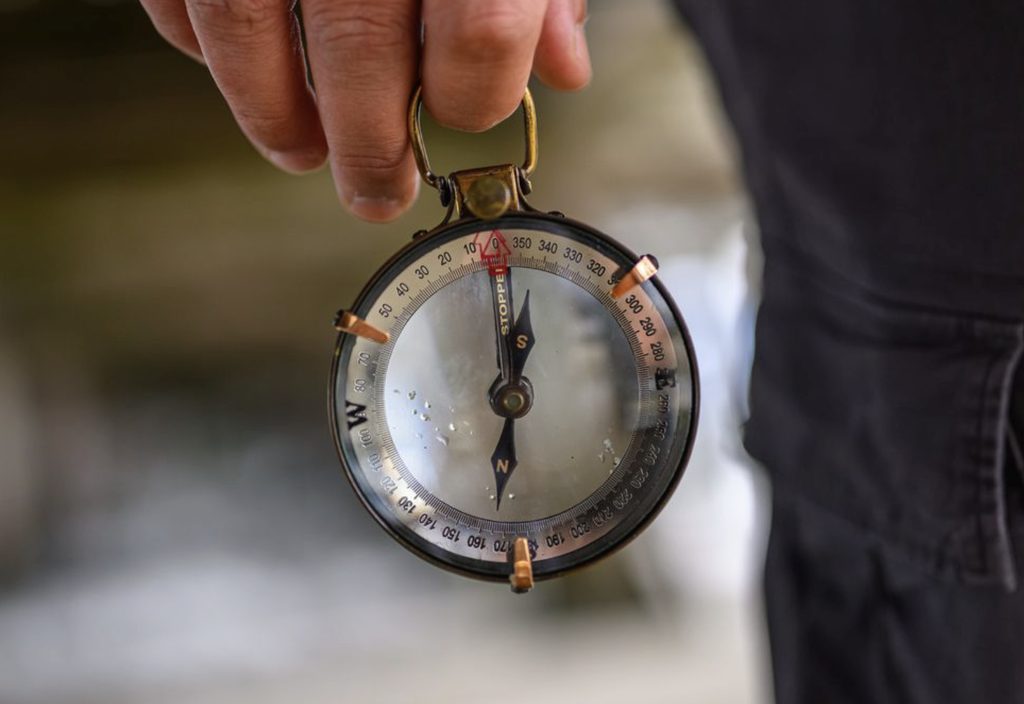
Nihil Young’s (@nihilyoung) Compass is built around the kind of personal material AI cannot fake with any real conviction. Released August 14 on Zerothree, the debut album pulls from the day he met his wife, the birth of his daughter, the death of his father, and the private emotional terrain that turns a body of [...] Read More... from Nihil Young Explains Why AI Cannot Generate A Life The post Nihil Young Explains Why AI Cannot Generate A Life appeared first on Magnetic Magazine .
Nihil Young’s (@nihilyoung) Compass is built around the kind of personal material AI cannot fake with any real conviction.
Released August 14 on Zerothree, the debut album pulls from the day he met his wife, the birth of his daughter, the death of his father, and the private emotional terrain that turns a body of work into more than a folder of finished tracks. The album features collaborations with Rowland Giles, Leo Wood, Lasada, Jordan Arts, FRDRK, Adriana Stone, TYGR TYGR, and others, but the emotional center is still Nihil himself.
That context gives this interview a sharper edge than another broad conversation about AI in music. Nihil is not talking about artificial intelligence as a novelty, a shortcut, or a harmless productivity layer. He is talking about the psychological pressure it places on producers who already compare themselves to other artists online, the danger of conflating finish with purpose, and the fragile early stage of a song before it knows what it wants to become.
Compass gives him a real case study for that argument.
These songs needed time because the memories behind them needed time. In the interview below, Nihil talks about why rough ideas deserve protection, why polish is becoming easier to fake, and why a living artistic process still depends on the one thing no model can generate: a life.
Interview With Nihil Young
For producers already comparing themselves to others online, how does AI affect confidence?
It shouldn’t. Most AI tracks still sound goofy, full of artifacts, and half-assed. They’re not competition, they’re slop. And even when you’re looking at “human” releases, most of the time you’re comparing yourself to actual teams of producers, mix engineers, and mastering engineers carefully hidden in the credits. You’re doing this all by yourself. That changes the math. Comparing yourself to other humans is already a trap.
Comparing yourself to a whole production team, or worse, to a generated track that falls apart the second you listen closely, is just ridiculous. The algorithm will always produce something faster and cleaner on the surface, but it has no stakes, no fear, no private reason to exist.
Confidence comes from knowing why you make music, not from measuring yourself against something that doesn’t even have a soul.
Early ideas for a project like Compass are often rough. How should artists treat that vulnerable stage when polished AI output is always only a click away?
Protect that roughness like it’s sacred.
The first sketches for Compass were messy, emotional, sometimes barely held together. That was the part that actually mattered. AI can spit out something shiny (or shittily shiny) in seconds, but it can’t give you the feeling that made you start the track in the first place. The rough stage is where the real material lives, the unfinished thoughts, the half-formed emotions, the things you don’t fully understand yet.
Don’t rush to “finish” what still needs to breathe. If you clean it up too early, you kill the thing that made it worth making.
Some tracks sound polished without saying much. How can artists avoid mistaking polish for purpose?
Ask yourself one hard question: if I strip away the perfect mix, the expensive plugins, the AI-assisted BS, is there still something left that feels true? On Compass I kept coming back to that test. Polish is easy and getting easier every month. Purpose is harder, and it’s the only thing that lasts. A track can sound expensive, modern, and professionally finished, and still say absolutely nothing.
The danger is falling in love with the surface and forgetting to ask whether the track actually needed to exist.
How can producers stay patient with unfinished work, the kind that eventually became the personal stories on Compass, when finished-sounding material is so easy to generate with AI?
Remind yourself that the unfinished stage is where the real writing happens.
The songs about my daughter, about losing my father, those needed time. They needed me to sit with the discomfort instead of resolving it too quickly. AI can hand you a complete-sounding track today, but it can’t give you the version of yourself that only appears after weeks or months of living with an idea. AI most certainly can't give you a life of memories, emotions and experience. Patience isn’t a romantic idea, it’s practical. The work that matters almost always feels incomplete for longer than is comfortable.
That discomfort is part of the process, not a problem to be solved with a prompt.
What perspective would help artists who feel discouraged by AI’s ability to imitate parts of the process?
AI can imitate sound, structure, even a surface-level emotion.
What it cannot touch is the living process Jung called individuation: the long, often painful work of becoming who you actually are. That process is not a style or a prompt. It is the confrontation with your own Shadow, the integration of the parts of yourself you would rather keep hidden, the slow conversation with the unconscious that only happens when you stay with the work long enough for it to change you.
Compass exists because of things no model has ever lived: the day I met my wife, the birth of my daughter, the death of my father. Those experiences do not sit in a dataset. They sit in the body, in the nervous system, in the private mythology every person carries.
Jung would say that is the difference between a symbol that is alive and one that is merely copied. One comes from the Self. The other is a clever mask.
Hayao Miyazaki once said, looking at early AI animation, that it was “an insult to life itself.” I understand the anger in that sentence. When something tries to reproduce the appearance of feeling witho